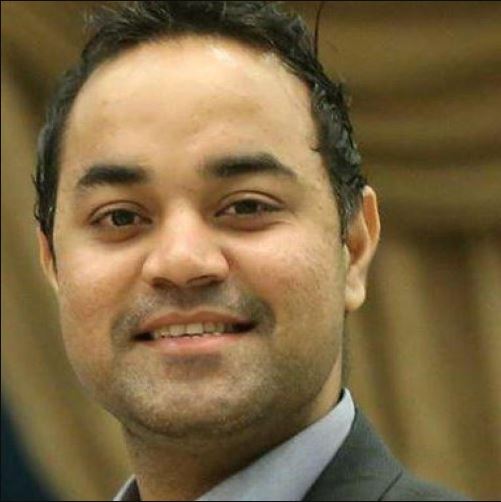
From 32 Marks in the First Mock to CAT 98.98%ile: CATKing Topper Naman's Success Story
What Helped Naman Score 98.98 Percentile?
Naman scored 98.98 percentile in CAT on his first attempt, including 99.70 in Quant, 96.13 in DILR and 92.59 in VARC. His preparation centred on studying every day, attending live classes when possible, watching recorded lessons, attempting 15–20 full CAT mocks and carefully analysing mistakes. He maintained a “Silly Mistakes Notebook,” used sectional tests and followed structured approaches to set selection and question prioritisation.
|
CAT detail |
Naman’s result |
|
Overall CAT percentile |
98.98 |
|
Quantitative Aptitude (QA) |
99.70 percentile |
|
Data Interpretation & Logical Reasoning (DILR) |
96.13 percentile |
|
Verbal Ability & Reading Comprehension (VARC) |
92.59 percentile |
|
Academic profile |
95% in Class 10; 84% in Class 12; 7.0 CGPA in engineering graduation |
|
Candidate profile |
Fresher; General Engineer Male; first CAT attempt |
|
Course start |
Purchased course on August 17; began attending classes 3–4 days later |
|
Full CAT mocks |
Approximately 15–20, plus NMAT and SNAP mocks |
|
Mock review method |
Recorded errors in a “Silly Mistakes Notebook” and reviewed each mock the following day |
Watch the full interview: https://www.youtube.com/watch?v=UwbBTtO7u_g
Naman's CAT Success Profile
|
Metric / Parameter |
Topper Details |
|
Student Name |
Naman |
|
Final CAT Percentile |
98.98 %ile |
|
QA Percentile |
99.70 %ile (top ~0.3% among ~2.5 lakh candidates) |
|
DILR Percentile |
96.13 %ile |
|
VARC Percentile |
92.59 %ile |
|
Academic Background |
Engineer, 7.0 CGPA, Tier-3 college |
|
Mock Journey |
From about 32 marks in the first mock to 98.98 percentile |
|
Total Mocks Attempted |
15 to 20 CAT mocks, plus all NMAT and SNAP mocks |
|
Mock Analysis Method |
Silly Mistakes Notebook, analysis on the day after each mock |
|
VARC Reading Habit |
Aeon Essays on mobile, one-line paragraph summaries |
|
DILR Strategy |
5 to 7 minute scan, 2 doable sets solved, 3rd set skipped |
How Naman Scored CAT 98.98 Percentile and 99.70 in Quant with a 7.0 CGPA
Many CAT aspirants from average academic backgrounds believe a 99+ percentile sectional score is out of reach. Naman's story says otherwise. A general engineer from a Tier-3 college with a 7.0 CGPA, he scored 98.98 percentile in his very first CAT attempt, with a 99.70 percentile in Quantitative Aptitude that placed him in the top 0.3% among roughly 2.5 lakh candidates.
His first full-length CAT mock fetched only about 32 marks. What changed was not talent but process: daily consistency, a Silly Mistakes Notebook, disciplined mock analysis and smart section-wise strategy, all built on the CATKing course. This is how he did it.
Naman's Academic Background
• 10th Standard: 95%
• 12th Standard: 84%
• Graduation: 7.0 CGPA from a Tier-3 engineering college
He was travelling home from college in a cab when the CAT result arrived, and he shared the news with his family over the phone.
Step 1: Build a Daily CAT Preparation Routine You Never Break
Naman bought the CATKing course on August 17th and began attending classes three to four days later. His routine was simple and non-negotiable.
• Live Verbal classes: He attended every live Verbal class on Wednesdays and Fridays.
• Recorded lectures: For other subjects, he made sure to watch the recorded video lectures daily without fail, to fit around his college schedule.
• Dashboard resources: He used Level of Difficulty 1 (LOD1) and Level of Difficulty 2 (LOD2) material, and the dashboard's gamified trophy system kept his motivation high.
• Real-life constraints: He prepared alongside college end-semester exams, his birthday and Diwali celebrations.
The core rule: Naman says the single most important factor is opening the laptop and studying every single day, whether it is a Monday or a Sunday, for as many hours as possible.
Step 2: Mock Strategy and Mock Analysis That Moved the Needle
Naman started with a score of about 32 marks in his first full-length CAT mock. Instead of getting discouraged, he treated every mock as a diagnostic tool.
• Volume: He attempted 15 to 20 full CAT mocks, and completed all mocks for NMAT and SNAP as well.
• The Silly Mistakes Notebook: He kept a dedicated notebook and jotted down every mistake made during a test attempt.
• Next-day analysis: The day after each mock, he sat down to analyse his performance thoroughly, recorded all errors in the notebook and actively tried not to repeat them in later mocks.
• Learning from others: He reviewed toppers' attempts and attended the Sunday mock analysis sessions hosted by Prantik Sir and Sahil Sir.
Step 3: Section-Wise CAT Strategy: VARC, DILR and QA
Verbal Ability and Reading Comprehension (VARC): 92.59 Percentile
• Reading technique: Naman read Aeon Essays on his mobile phone whenever he had spare time. This improved his reading speed, helped him grasp central themes and let him practise writing one-line summaries of paragraphs.
• Sectional practice: He took a high volume of VARC sectional tests to build speed, improve paragraph comprehension and refine accuracy on VA questions such as jumbled sentences.
• Exam day issue: Test-centre anxiety and a miscommunication made him reach his assigned computer seat late. He quickly calmed himself down to protect his performance in the remaining sections.
Data Interpretation and Logical Reasoning (DILR): 96.13 Percentile
• Set selection protocol: He followed Prantik Sir's rule of spending the first 5 to 7 minutes scanning and analysing all the sets before attempting any.
• Execution: He identified and completed 2 doable sets, solving the first in just about 7 minutes, which gave him a massive confidence boost. He skipped the 3rd set, which was exceedingly difficult.
• Bootcamps: He paused all other work to attend every live DILR bootcamp session without missing any.
Quantitative Aptitude (QA): 99.70 Percentile
• Strong foundation: He leveraged a natural affinity for mathematics and built upon 10th-grade fundamental concepts.
• Two-pass scanning strategy: He first scanned the section for formula-based, easier questions, which made up nearly half the section, to secure quick marks. Only after that did he move to the time-consuming, thinking-heavy questions.
• PYQs and extra classes: He solved previous year questions (PYQs) and attended all arithmetic and algebra bootcamps and extra problem-solving sessions.
Naman's Advice for Future CAT Aspirants
1. Brush up the basics first: Use the 7 to 8 months before the exam to master foundational concepts across VARC, DILR and QA.
2. Take weekly mocks: Attempt at least 1 mock per week early in your preparation to adapt to exam conditions and time pressure.
3. Use sectional tests: Use targeted sectionals to fix specific weak areas.
4. Study every day: Consistency beats intensity. Open the laptop and study daily, whatever the day.
Why CATKing Delivers Proven CAT Success Stories
Naman's journey shows that a 7.0 CGPA, a Tier-3 college and a first mock score of 32 marks are starting points, not limits. With live classes, recorded lectures, LOD1 and LOD2 material, bootcamps, full-length mocks and Sunday mock analysis sessions, CATKing gives aspirants a structured system to turn consistent effort into a 99+ percentile section score.
If you want a plan built around your own strengths and gaps, start with a CATKing course and a mentor who has guided thousands of aspirants to top B-schools.
Frequently Asked Questions
Can a fresher engineer with a 7.0 CGPA score 98.98 percentile in CAT?
Yes. Naman scored 98.98 percentile in his first CAT attempt with a 7.0 CGPA from a Tier-3 engineering college. CAT does not test your college tier or graduation marks. It tests preparation quality, and Naman's consistent daily study, mock analysis and sectional practice with CATKing turned an average academic record into a 99+ percentile Quant score.
How did Naman score 99.70 percentile in CAT Quantitative Aptitude?
Naman built on his natural affinity for maths and 10th-grade fundamentals, attended all CATKing arithmetic and algebra bootcamps, and solved previous year questions (PYQs). On exam day he used a two-pass strategy: first secure the formula-based, easier questions, which formed nearly half the section, then move to the thinking-heavy ones.
How many mocks should you take for CAT?
Naman attempted 15 to 20 full-length CAT mocks, plus every mock for NMAT and SNAP. He started with a score of about 32 marks in his first CAT mock. His advice to aspirants is to take at least one mock every week early in preparation to get used to exam conditions and time pressure.
What is a silly mistakes notebook and how does it improve CAT mock scores?
A silly mistakes notebook is a dedicated notebook where you write down every error made during a mock attempt. Naman reviewed each mock the next day, logged all errors in the notebook and consciously avoided repeating them in later mocks. This turns mock analysis into a repeatable habit that steadily cuts avoidable errors.
How do you select the right DILR sets in CAT?
Spend the first 5 to 7 minutes scanning all the sets before solving any. Naman followed this rule from Prantik Sir, identified two doable sets, solved the first in about 7 minutes for a big confidence boost and skipped the third set because it was far too difficult. He scored 96.13 percentile in DILR.
How can you improve VARC and reading speed for CAT?
Read daily and practise short summaries. Naman read Aeon Essays on his phone in spare time, wrote one-line summaries of paragraphs and took a high volume of VARC sectional tests to improve speed and accuracy, including on jumbled-sentence questions. He scored 92.59 percentile in VARC.
When should you start CAT preparation?
Naman advises using the 7 to 8 months before the exam to master the basics of VARC, DILR and QA before heavy mock practice begins. He bought the CATKing course on August 17th, started attending classes 3 to 4 days later and studied daily until the exam.
How helpful did you find this article?
Thanks for the feedback! Your rating helps us improve future digests.
