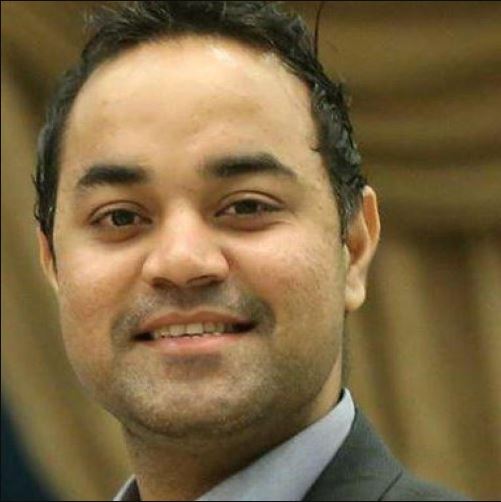
When to Start CAT Mocks: Topper's 35 Mock Plan for CAT 2027 (98.53 Percentile Strategy)
CATKing is a Mumbai-based MBA entrance exam coaching company founded by Sumit Singh, offering preparation for CAT, XAT, NMAT, SNAP, CET, GMAT, and GRE through online and offline classes. When should you start CAT mocks, and how many do you need? CATKing topper Dhruv Khanna moved from the 77th percentile to 98.53 percentile by treating mocks as his main study material. This guide breaks down his 35 mock plan so you can use it for CAT 2027-
Key Takeaways
• Score jump: 77th percentile to 98.53 percentile in the repeat attempt.
• 35 mocks: up from 20 to 30 in his first attempt, started in mid-May.
• Weekly rhythm: Saturday for the mock, Sunday for a full-day analysis, and 3 mocks a week at the peak.
• Analysis depth: up to 10 hours on one mock.
• Quant method: a 3-level analysis of unattempted questions, time and rough work.
• Mindset: early mistakes are fine, repeating them is not.
Who Is Dhruv Khanna and What Did He Score in CAT?
|
Detail |
Result |
|
Overall percentile |
98.53 (up from 77 in the previous attempt) |
|
VARC |
98.8 percentile |
|
Quant |
97.8 percentile |
|
DILR |
89.7 percentile |
|
Calls |
8 IIMs, IFT, top IITs including IIT Bombay, and MDI Gurgaon |
As a General Engineer Male (GEM), Dhruv advises applying to IFT, MDI Gurgaon and the top IITs as strong safety options alongside the IIMs.
When Should You Start CAT Mocks?
Dhruv started his mocks in mid-May during his repeat attempt. He treated them as his primary study material, instead of relying only on traditional preparation books. The result: 35 mocks, compared with 20 to 30 in his first attempt.
|
Item |
First Attempt |
Repeat Attempt |
|
Mocks taken |
20 to 30 |
35 |
|
Percentile |
77 |
98.53 |
What Was the Topper's Weekly Mock Routine?
|
Day |
What He Did |
|
Saturday |
Mock Day |
|
Sunday |
Full-day Analysis Day |
|
Peak preparation |
Raised the frequency to 3 mocks per week |
The analysis was rigorous. Dhruv spent up to 10 hours analysing a single mock, to find structural flaws and reasoning errors, not only the questions he got wrong.
How Should You Analyse Each Section of a Mock?
How do you analyse VARC?
• Compare your thinking with the author's: line up your thought process against the author's intent and the answer key, using the video or text solutions.
• Find where your logic diverged: note the point where your reasoning left the author's perspective.
• Adjust your reading approach: change how you read so the gap closes in the next mock.
How do you analyse Quant? The 3-level framework
|
Level |
What to Do |
|
1. Unattempted questions |
Find out why approachable questions were left unattempted |
|
2. Time tracking |
Identify time-sink questions, such as 5 minutes on a 3-mark question, and refine your technique to bring the solution time down to 2 minutes |
|
3. Rough work |
Divide your rough sheet into neat boxes labelled with question numbers, so that you can rebuild your thought process after the test |
The boxed rough sheet is the key. When every question has its own labelled box, your analysis does not depend on memory.
What Is the Right Mindset for Mocks?
• Learn from errors: mistakes are acceptable in the initial mocks, provided you analyse them thoroughly so that the exact same error never repeats.
• Stay consistent: stay resilient through the initial low scores and keep to structured guidance and motivation.
Topper's 35 Mock Plan: Quick-Reference
|
Question |
Answer |
|
Start date? |
Mid-May |
|
Number of mocks? |
35 |
|
Mock day? |
Saturday |
|
Analysis day? |
Sunday, full day |
|
Peak frequency? |
3 mocks per week |
|
Time on one analysis? |
Up to 10 hours |
|
Quant time target? |
Bring time-sinks from 5 minutes to 2 minutes |
|
Rough work? |
Boxed and labelled by question number |
What Should CAT 2026 Aspirants Do Now?
• This week: make Saturday your mock day and Sunday your analysis day.
• After every mock: compare your VARC reasoning with the author's intent and the solutions.
• In Quant: review unattempted questions, track time-sinks and use boxed rough work.
• Each error: analyse it fully so that it does not come back.
• Stay on track: join CATKing's mentor-led preparation, including Real CAT Mocks and video solutions.
Frequently Asked Questions About the 35 Mock Plan
When should I start taking CAT mocks?
Dhruv Khanna, a CATKing topper, began his mocks in mid-May in his repeat attempt and treated them as his primary study material. Do not wait to finish the syllabus; start early and learn from the mocks themselves.
How many mocks did Dhruv Khanna take for CAT?
He took 35 mocks in his repeat attempt, up from 20 to 30 mocks in his first attempt.
What was Dhruv Khanna's CAT score?
He improved from the 77th percentile in his previous attempt to 98.53 percentile overall. His sectional percentiles were 98.8 in VARC, 97.8 in Quant and 89.7 in DILR.
What was Dhruv Khanna's weekly mock schedule?
Saturday was Mock Day and Sunday was a full-day Analysis Day. During peak preparation he increased the frequency to 3 mocks per week.
How long should I spend analysing one mock?
Dhruv spent up to 10 hours analysing a single mock, so that he could identify structural flaws and reasoning errors, not just wrong answers.
How do I analyse VARC mocks?
Compare your own thought process with the author's intent and the answer key, using the video or text solutions. Find the point where your logic diverged from the author's perspective and adjust your reading approach accordingly.
What is the 3-level Quant analysis framework?
Level one: analyse the approachable questions you left unattempted. Level two: track time, find the time-sink questions, such as 5 minutes on a 3-mark question, and refine your technique to bring the solution time down to 2 minutes. Level three: organise your rough work.
How should I organise rough work during a mock?
Divide your rough sheet into neat boxed sections, each labelled with the question number. During post-test analysis, this lets you reconstruct your exact thought process.
Are mistakes in early mocks a problem?
No. Mistakes are acceptable in the initial mocks as long as you analyse them thoroughly so that the exact same error is never repeated.
Which calls did Dhruv Khanna receive?
He received calls from 8 IIMs, IFT, top IITs including IIT Bombay, and MDI Gurgaon.
How helpful did you find this article?
Thanks for the feedback! Your rating helps us improve future digests.
