
The Xavier Aptitude Test (XAT) is one of India’s most respected MBA entrance exams, conducted every year by XLRI Jamshedpur. XAT scores are accepted by 11 XAMI member institutes and over 150 associate B-schools across the country.
Unlike most MBA entrance tests, XAT evaluates not only aptitude but also decision-making ability, ethical judgment, and structured thinking through its unique Decision Making and Essay Writing components.
XAT 2027 is tentatively expected in early January 2027 (first Sunday) from 2:00 PM to 5:00 PM. Aspirants should ideally begin preparation at least six months in advance to build concepts, practice thoroughly, and develop a stable exam strategy.

| XAT 2027 Expected Timeline | |
|---|---|
| Registration Opens | July / August 2026 |
| Registration Closes | November / December 2026 |
| Admit Card Release | Late December 2026 |
| XAT Exam Date | Early January 2027 |
| Answer Key Release | Last week of January 2027 |
| Result Declaration | Late January / Early February 2027 |
XAT is a computer-based national-level MBA entrance exam conducted annually by XLRI Jamshedpur. It differs from CAT and other exams because it tests:
-
Ethical reasoning
-
Decision-making ability
-
Structured writing skills
-
Mental stamina through a long paper format
Candidates are allowed to switch between sections, which makes section order and time management strategy extremely important.
XAT Exam Pattern 2027
| Section | Questions | Time |
| Verbal & Logical Ability (VALR) | 26 | 170 minutes (total for Part 1) |
| Decision Making (DM) | 21 | |
| Quantitative Ability & Data Interpretation | 28 | |
| Part 1 Total | 75 | |
| General Knowledge (GK) | 20 | 10 minutes |
| Total Questions | 95 | 180 minutes |
Marking Scheme:
- Correct answer: +1 mark
- Incorrect answer (Part 1 only): -0.25 marks
- Un-attempted questions (beyond 8 allowed skips): –0.10 marks each
- GK: no negative marking, not percentile-scored
XAT Syllabus Overview
XAT Verbal & Logical Ability
- Reading Comprehension
- Vocabulary
- Analogy
- Parajumble
- Grammar
- Critical Reasoning
- Fill in the Blanks
While the verbal difficulty level of XAT and CAT is pretty similar, XAT does include certain unique questions not seen anywhere else.
For instance, the poetry RCs require a nuanced understanding of poetic interpretation as well as literary devices. Apart from poem RCs, there are vocabulary, grammar, and figure of speech questions that can stump you if you haven’t practised enough. Moreover, the verbal section in XAT also has critical verbal reasoning questions.
The best way to ace the XAT verbal is to build from the basics of the XAT syllabus for verbal and give timed mocks in an exam environment.
XAT Decision Making
- Complex Arrangement
- Data Arrangement
- Conditioning
- Grouping
- Assumptions
- Caselets
- Premises
- Conclusions
The XAT syllabus for decision making is fluid there are no texts, topics, or theories to guide you. What helps here is attempting as many DM questions from past papers and mock tests as possible. And not just aiming to get the correct answer; your goal should be to understand why a specific choice is the correct one and why the other choices were wrong. It is this understanding that will enable you to answer DM questions on DDay.
XAT Quantitative Ability & Data Interpretation
- Arithmetic
- Percentage
- Geometry
- Pie
- Charts
- Surds and Indices
- Data Interpretation
- Algebra
- Mensuration
- Bar
- Diagrams
- Tables
Apart from the arithmetic, algebra, geometry, number system, and modern math topics that XAT has in common with CAT, you must also focus on preparing trigonometry, statistics, and data interpretation. The DI questions alone will amount to a significant 8-12 marks. Do remember that the use of calculators is strictly prohibited during XAT, leaving you to solve complex calculations by hand. Learn shortcuts and tricks to calculate faster, or you’ll end up losing way too much time on the DI sets.
General Knowledge
- Science
- Economy
- Business
- Politics
- Static GK
- Sports Prizes and Awards
- World Affairs
- Government
- Constitution of India
Though GK does not affect percentile, it plays an important role during the final selection process.
Best Books for XAT Preparation (Section-wise)
| Section | Book Name (with Author/Publisher) | Why This Book is Useful | |
|---|---|---|---|
| Decision Making | XAT Previous Year Papers – by Disha / Arihant Publications | Best source to understand real XAT question pattern and difficulty and practising Decision Making caselets and sets | 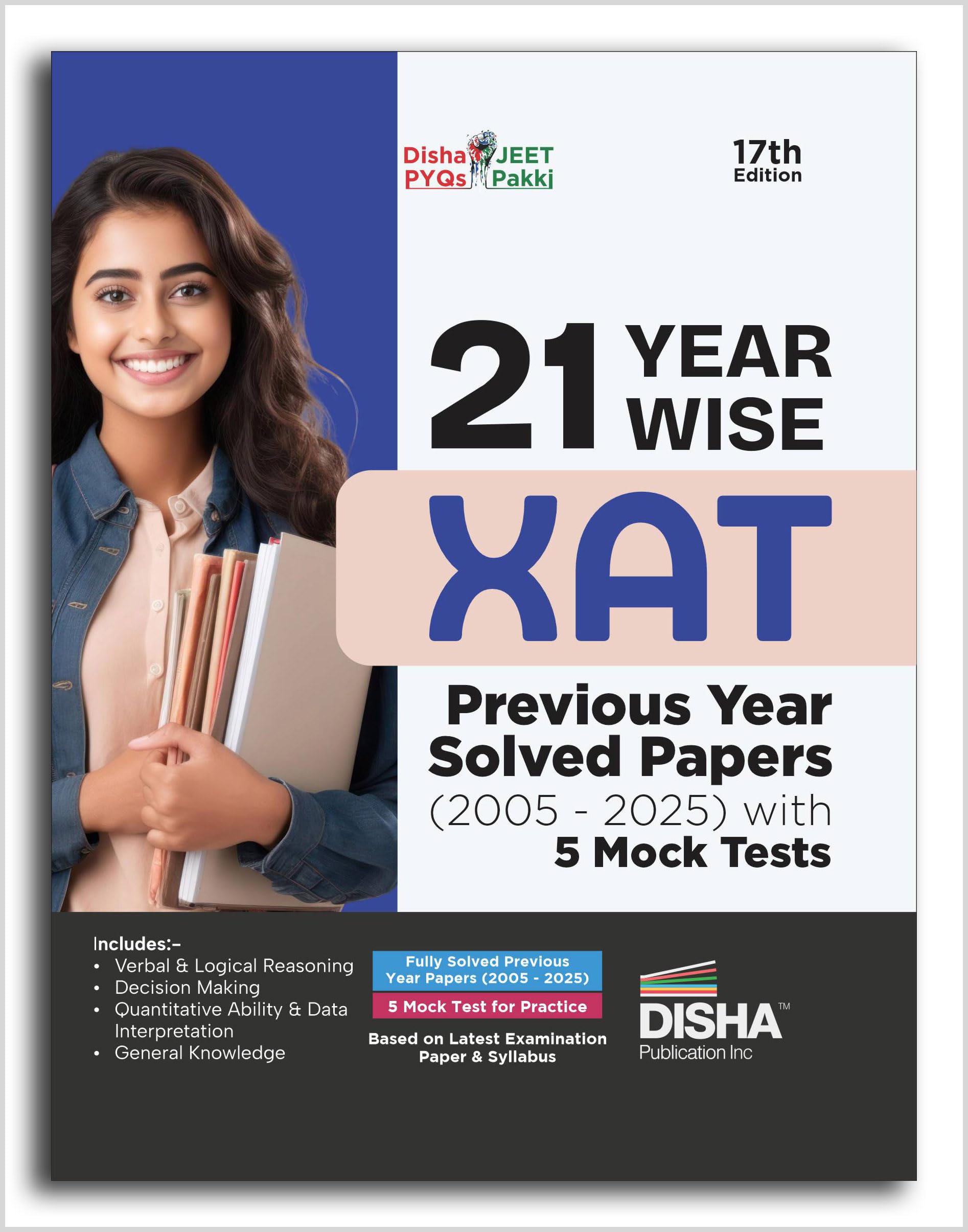 |
| Verbal Ability & Logical Reasoning | Word Power Made Easy – by Norman Lewis | Improves vocabulary and comprehension for RCs, cloze tests, and verbal logic |  |
| Verbal Ability and Reading Comprehension – by Arihant Experts | Practice for RCs, para jumbles, grammar, and critical reasoning |  |
|
| Quantitative Aptitude & Data Interpretation | Quantitative Aptitude – by R.S. Aggarwal | Covers arithmetic, algebra, geometry, and number systems thoroughly |  |
| XAT Data Interpretation Sets – by Arihant Publications | Helps master DI tables, graphs, and calculation-heavy questions | 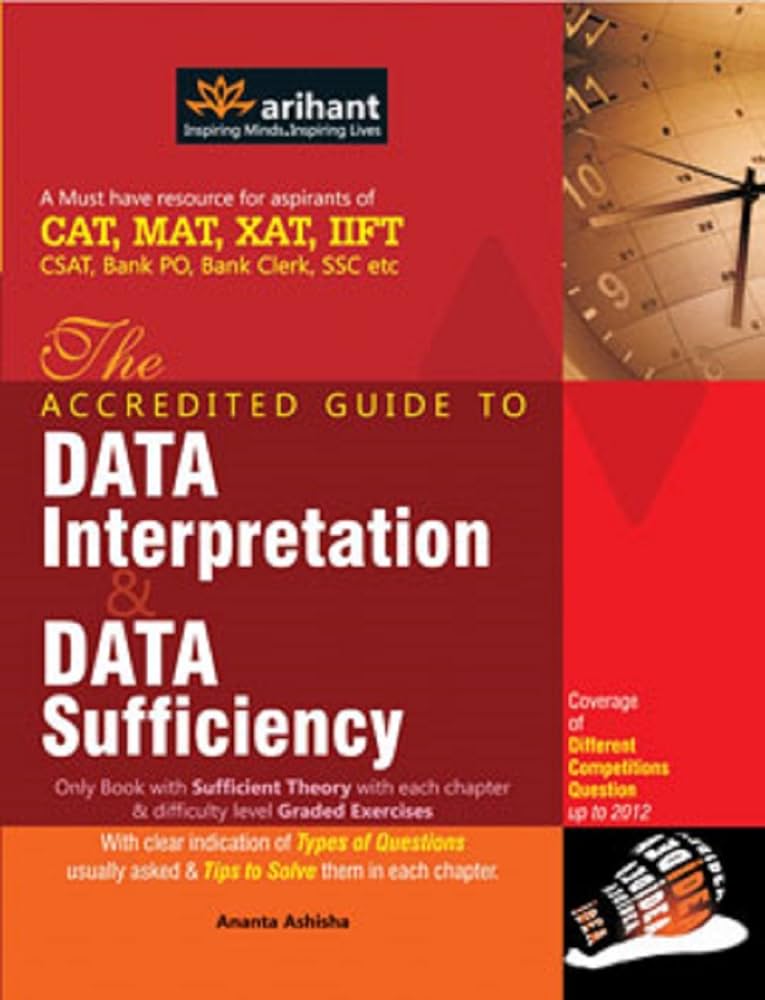 |
|
| General Knowledge | Lucent’s General Knowledge – by Lucent Publications | Strong base for static GK topics like history, geography, and polity |  |
|
General Knowledge by Manohar Pandey |
Best for current affairs, economy, and business awareness |  |
|
| Essay Writing | 151 Essays – by S.C. Gupta | Improves argument flow, idea development, and clarity |  |
Mock Strategy for XAT
XAT is not just about learning formulas or grammar rules it’s about how you think under pressure. Mock tests are your training ground for building that mindset.
XAT is unique because it tests:
-
Logical reasoning
-
Ethical judgment
-
Decision-making ability
-
Mental endurance
XAT’s pattern remains fairly stable over the years. This means:
-
Previous year papers are extremely valuable
-
Question types are predictable
-
A fixed, repeatable strategy can be built
Solving multiple years of XAT papers + taking full-length mocks is one of the most powerful preparation tools.
How to Use Mock Tests Effectively
Step 1: Review Time Usage First
Begin by looking at where your time actually went.
Ask:
-
Which section consumed the most time?
-
Did I rush through any section because I overspent time earlier?
-
Were there questions where I got stuck for too long?
Step 2: Examine Accuracy, Not Just Attempts
Next, study your accuracy pattern:
-
In which section did my accuracy fall sharply?
-
Were the mistakes due to:
-
Concept gaps?
-
Misreading the question?
-
Calculation errors?
-
Poor elimination?
-
This tells you whether your problem is knowledge-based or strategy-based.
Step 3: Identify Confusing Question Types
Some question types repeatedly cause trouble such as certain Decision Making caselets or specific Quant topics.
Note:
-
Which question formats felt unfamiliar?
-
Which took more time than expected?
-
Which ones I guessed without proper logic?
These become your priority practice areas for the next week.
Step 4: Maintain a Personal Error Log
Create a simple error log after each mock with four columns:
-
Question type
-
Mistake made
-
Correct logic
-
Lesson learned
Step 5: Test Your Strategy, Not Just Knowledge
Every mock is also a strategy test.
Ask yourself:
-
Did my section order help or hurt me?
-
Did I panic anywhere?
-
Did I skip the right questions?
-
Was my accuracy better or worse than the last mock?
If your score is stuck, the issue is often not preparation it is execution.
Attempt Strategy for XAT (Exam-Day Game Plan)
1. Finish One Section at a Time
Avoid jumping between sections.
Switching sections leads to:
-
Loss of concentration
-
Mental fatigue
-
Hidden time leakage
XAT is a long exam. Your brain needs rhythm.
Complete one section fully before moving to the next. This keeps your thinking structured and reduces panic.
2. Stick to a Tested Strategy
By the time you reach exam day, your strategy should already be tested in mocks.
Do not:
-
Try a new section order
-
Change your time split
-
Experiment with risky approaches
Follow the same sequence and time plan that worked during practice.
Familiar execution reduces pressure and increases accuracy.
3. Customize Only After Stability
Only make small adjustments if:
-
Your mock scores have become consistent
-
You clearly know your strongest and weakest sections
-
You understand your accuracy trends
For example:
-
If your Quant accuracy is high but slow give it more time
-
If your Verbal accuracy drops later attempt it earlier
Strategy should be data-driven, not emotional.
Time Allocation (Indicative)
| Section | Time |
|---|---|
| Quant & DI | 80-85 minutes |
| Decision Making | 40-45 minutes |
| Verbal Ability | 35-40 minutes |
This is a broad guide. You should fine-tune it based on:
-
Mock performance
-
Accuracy levels
-
Speed vs confidence
If you want structured learning, expert mentorship, and exam-focused mock analysis, check out the complete XAT preparation courses.
Frequently asked question
1. How many mock tests are enough for XAT preparation?
There is no fixed number, but most serious aspirants take 10-15 full-length mocks before the exam. The key is not just attempting mocks but analyzing them properly to improve accuracy, time management, and section order strategy.
2. When should I start taking full-length XAT mocks?
You should begin taking full-length mocks once you complete basic topic coverage. Ideally, mocks should start 2-3 months before the exam and gradually increase in frequency as the exam approaches.
3. Should I focus more on mock attempts or mock analysis?
Mock analysis is more important than mock attempts. Attempting a mock takes 3 hours, but proper analysis can take 4-5 hours. This is where you identify weak areas, repeated mistakes, and inefficient question selection.
4. How do I know if my attempt strategy is working?
Your strategy is working if:
-
Your scores are stable or improving
-
Your accuracy is increasing
-
You are finishing sections within planned time
-
You are not panicking or rushing in later sections
Consistency matters more than occasional high scores.
5. Is it okay to change section order in XAT?
You should only change section order after testing it in multiple mocks. Avoid experimenting close to the exam. A strategy that feels familiar under pressure is more reliable than a new one.
6. How can mock tests help in Decision Making preparation?
Mocks expose you to real case-style questions under time pressure. They help you practice:
-
Identifying stakeholders
-
Avoiding emotional answers
-
Choosing balanced and ethical solutions
This improves judgment, not just speed.
7. How often should I revise based on mock performance?
Every week, revise topics where:
- Accuracy is low
- Time spent is high
- Mistakes repeat
Mocks should directly decide what you study next.
Also Read this articles:-
Top Colleges Accepting XAT (2026)
XAT Toppers tips
Strategy for XAT Decision Making
How helpful did you find this article?
Thanks for the feedback! Your rating helps us improve future digests.
