
Strategic Planning: An Integral Component of MBA Education
A career in strategic planning involves helping a corporation design a path to growth and profitability amidst competition and constant change. The strategic planner's role consists of helping the organization to gather, analyze and organize information. They track industry and competitive trends, develop forecasting models and scenario analysis, examine strategic performance, spot emerging market opportunities, identify business threats, look for novel strategic solutions, and develop creative action plans. Strategic planning involves understanding what the organization’s current strategy is, what has been tried in the past and also what it will be in the future (“Strategic Intent”).
BENEFITS OF STRATEGIC PLANNING
1. Create One, Forward-Focused Vision
Strategy touches every employee and serves as an actionable way to reach your company’s goals.
One significant benefit of strategic planning is that it creates a single, forward-focused vision that can align your company and its shareholders. By making everyone aware of your company’s goals, how and why those goals were chosen, and what they can do to help reach them, you can create an increased sense of responsibility throughout your organization.
This can also have trickle-down effects. For instance, if a manager isn’t clear on your organization’s strategy or the reasoning used to craft it, they could make decisions on a team level that counteract its efforts. With one vision to unite around, everyone at your organization can act with a broader strategy in mind.

2. Draw Attention to Biases and Flaws in Reasoning
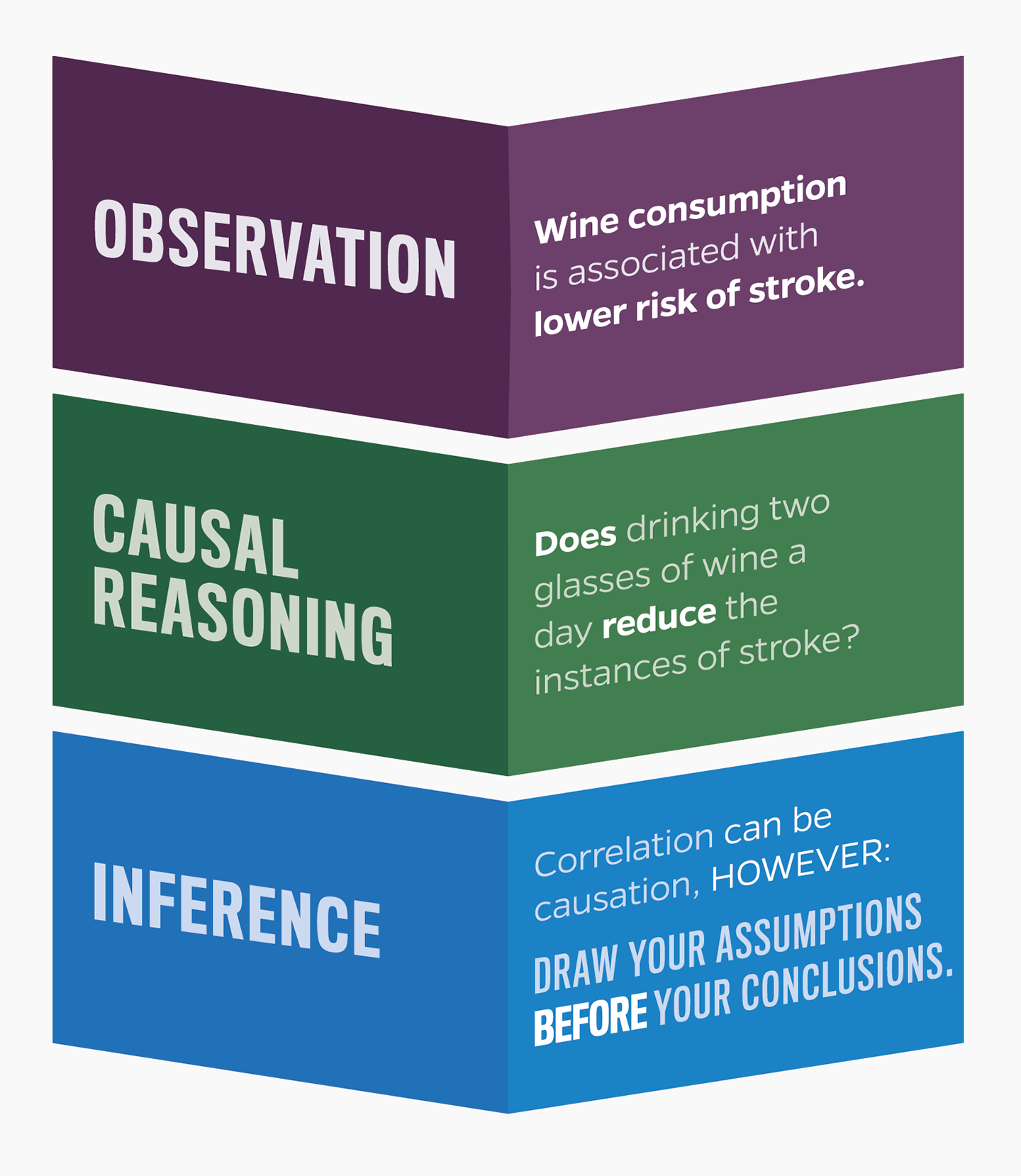
The decisions you make come with inherent bias. Taking part in the strategic planning process forces you to examine and explain why you’re making each decision and back it up with data, projections, or case studies, thus combatting your cognitive biases.
- The recency effect: The tendency to select the option presented most recently because it’s fresh in your mind
- Occam’s razor bias: The tendency to assume the most obvious decision to be the best decision
- Inertia bias: The tendency to select options that allow you to think, feel, and act in familiar ways
One cognitive bias that may be more difficult to catch in the act is confirmation bais . When seeking to validate a particular viewpoint, it's the tendency to only pay attention to information that supports that viewpoint.
If you’re crafting a strategic plan for your organization and know which strategy you prefer,enlist other with differing views and opinions to help look for information that either proves or disproves the idea.
3. Track Progress Based on Strategic Goals
Having a strategic plan in place can enable you to track progress toward goals. When each department and team understands your company’s larger strategy, their progress can directly impact its success, creating a top-down approach to tracking key performation indicators. By planning your company’s strategy and defining its goals, KPIs can be determined at the organizational level. These goals can then be extended to business units, departments, teams, and individuals. This ensures that every level of your organization is aligned and can positively impact your business’s KPIs and performance.

By planning your company’s strategy and defining its goals, KPIs can be determined at the organizational level. These goals can then be extended to business units, departments, teams, and individuals. This ensures that every level of your organization is aligned and can positively impact your business’s KPIs and performance.In the dynamic landscape of business, where uncertainties and complexities prevail, the essence of strategic planning stands tall as a guiding beacon for success. Among the myriad disciplines encapsulated within the realm of business education, strategic planning emerges as a cornerstone, shaping the decision-making prowess of aspiring professionals pursuing an MBA.
Strategic planning, at its core, is the process of setting goals, determining actions to achieve those goals, and mobilizing resources effectively. It encompasses forecasting future trends, analyzing competitive landscapes, evaluating internal capabilities, and charting a course of action to attain sustainable competitive advantage. In the MBA curriculum, strategic planning serves as a pivotal bridge between theoretical frameworks and real-world applications, offering students a holistic understanding of organizational dynamics and market forces.
One of the paramount benefits of integrating strategic planning into MBA programs lies in its capacity to foster critical thinking and analytical acumen among students. By engaging in case studies, simulations, and strategic exercises, students are challenged to assess complex business scenarios, formulate strategic alternatives, and make informed decisions under uncertainty. This experiential learning approach not only hones their problem-solving skills but also cultivates strategic foresight—an indispensable attribute for effective leadership in today's turbulent business environment.
Moreover, strategic planning instills a sense of accountability and responsibility in MBA graduates by emphasizing the alignment of organizational objectives with stakeholder expectations. Through courses on corporate governance, ethics, and corporate social responsibility, students learn to integrate ethical considerations into strategic decision-making processes, thereby upholding integrity and sustainability in business practices. By nurturing a values-driven approach to leadership, MBA programs imbue students with the ethical compass necessary to navigate ethical dilemmas and uphold the highest standards of integrity in their professional endeavors.
Furthermore, strategic planning equips MBA students with the toolkit necessary to navigate disruptive forces and capitalize on emerging opportunities in an increasingly globalized marketplace. With modules focusing on environmental scanning, scenario planning, and risk management, students develop the resilience and adaptability required to thrive amidst uncertainty. By embracing a proactive stance towards change, MBA graduates emerge as catalysts for innovation, driving organizational growth and resilience in the face of evolving market dynamics.
In addition to its academic significance, strategic planning also serves as a gateway to career advancement and professional success for MBA graduates. Employers across industries value candidates who possess strategic acumen and the ability to envision the bigger picture while navigating the intricacies of day-to-day operations. Whether aspiring to roles in consulting, corporate strategy, entrepreneurship, or executive leadership, proficiency in strategic planning enhances students' marketability and empowers them to lead with confidence in an ever-evolving business landscape.
Strategic planning stands as an indispensable pillar of MBA education, empowering students with the cognitive tools, ethical principles, and strategic foresight needed to navigate the complexities of modern business environments. By integrating strategic planning into the curriculum, MBA programs not only equip students with the skills to excel as future business leaders but also instill a sense of purpose and responsibility in shaping a sustainable and ethical business landscape for generations to come.
Final Thoughts
Strategic planning is not just a subject in MBA—it’s a mindset.
It teaches you to:
- Think beyond the obvious
- Connect different business functions
- Make decisions that actually matter
If you develop this skill well, it will not just help you in exams—it will shape your entire career.
Because in the end, success in management is not about how much you know.
It’s about how well you think.
Frequently Asked Questions (FAQs)
1. What is strategic planning in MBA education?
Strategic planning in MBA education refers to the process of learning how organizations define long-term goals, analyze their competitive environment, and develop actionable plans for sustainable growth. MBA programs teach students to align business objectives with resources, market dynamics, and stakeholder interests to build competitive advantage.
2. Why is strategic planning important for MBA students?
Strategic planning is essential for MBA students because it strengthens critical thinking, problem-solving, and leadership skills. It helps them understand how organizations operate in complex environments and prepares them to make data-driven decisions that align with both short-term goals and long-term vision.
3. What are the key benefits of studying strategic planning in an MBA program?
Studying strategic planning offers multiple benefits, including:
-
The ability to analyze market trends and identify growth opportunities.
-
Development of strategic foresight and analytical acumen.
-
Exposure to real-world business scenarios through case studies and simulations.
-
Improved decision-making and leadership capabilities under uncertainty.
-
A better understanding of corporate ethics and governance in strategy formulation.
4. How does strategic planning help in career growth?
Professionals skilled in strategic planning are highly sought after in roles such as management consulting, corporate strategy, business analysis, and executive leadership. It equips graduates to drive innovation, manage organizational change, and lead teams effectively in competitive markets—key traits for career advancement in top firms.
5. What are some practical applications of strategic planning in business?
In practice, strategic planning is used to:
-
Set measurable organizational goals.
-
Forecast industry and market trends.
-
Analyze internal strengths and weaknesses.
-
Manage risks and allocate resources efficiently.
-
Develop and execute action plans to achieve sustained profitability.
6. Which MBA specializations focus on strategic planning?
Strategic planning is a core component of various MBA specializations such as Strategic Management, General Management, Operations, Consulting, and Entrepreneurship. It also plays a vital role in specialized domains like International Business and Corporate Governance.
7. How does learning strategic planning prepare students for real-world challenges?
MBA students engage in case studies, simulations, and scenario planning exercises that mirror real business challenges. These experiences enhance their ability to evaluate complex situations, anticipate risks, and implement strategies that adapt to rapidly changing market conditions.
8. What skills do MBA students gain from studying strategic planning?
Students gain essential skills such as data analysis, critical thinking, negotiation, communication, leadership, and ethical decision-making. They also develop an ability to connect organizational vision with operational execution—one of the most valued skills in business leadership.
9. How does strategic planning promote ethical and sustainable business practices?
Through courses on corporate governance, ethics, and CSR, strategic planning in MBA programs emphasizes responsible leadership. Students learn to balance profitability with sustainability, ensuring decisions consider environmental, social, and ethical implications.
10. What career opportunities are available after specializing in strategic planning?
Graduates specializing in strategic planning can pursue roles such as Strategy Analyst, Business Consultant, Corporate Planning Manager, Project Leader, Operations Strategist, or even Entrepreneur. These roles exist across industries including finance, technology, manufacturing, and consulting.
How helpful did you find this article?
Thanks for the feedback! Your rating helps us improve future digests.
