
Not all GMAT questions are equal. To score a 685+ on the GMAT Focus Edition, you don't need to master all question types at 99th percentile proficiency. You must focus on the top 10% of question types that count the most. There are ten question types across the three sections that determine your GMAT score: weighted averages, work-rate and number properties in the Quant section; Critical Reasoning Weaken, Assumption and Inference plus Reading Comprehension main idea and detail in the Verbal section; and Multi-Source Reasoning and Data Sufficiency in Data Insights. Get these ten right and your GMAT preparation becomes significantly easier.
The majority of GMAT takers focus equally on all subtopics, believing that they are all created equal. This is not the most efficient strategy, mathematically speaking. The GMAT Focus Edition algorithm favours accuracy with the question types it presents most frequently, and some subtypes appear much more frequently than others.
At CATKing, hundreds of recent GMAT debriefs show that these ten question types account for approximately 70 percent of the questions seen on test day. If you can solve these accurately and consistently, your score trajectory improves dramatically.
Quant: The Three Question Types That Matter Most
Weighted Averages and Mixtures
These questions appear in nearly every Quant section, usually 2–3 times. The challenge lies in converting long paragraphs about mixing chemicals, salaries or revenues into equations within two minutes.
CATKing teaches the alligation technique (balance scale method). Instead of relying on traditional x and y equations that consume 90+ seconds, alligation can solve most weighted average questions in under 30 seconds.

Set the two components at opposite ends, place the target average in the centre and derive the ratio using the differences. This technique alone can save 4–5 minutes across the Quant section.
Rate, Time and Work Problems
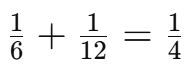
Two trains, two workers, two pipes — the wording changes, but the principle stays constant: combined rate equals the sum of individual rates. Many students mistakenly add times instead of rates.

So together they finish the work in 4 hours. Nearly 80% of work-rate questions are variations of this core principle.
Number Properties (Divisibility, Remainders and Primes)
Indian engineers often overuse calculations for number property problems. The GMAT Focus Edition rewards pattern recognition more than brute force computation.
Important patterns to memorise:
- If a number is divisible by 9, the sum of its digits is also divisible by 9.
- Remainders follow cycles.
- LCM, GCD and divisor-count questions are often solved using prime factorization.
- Even-odd rules simplify many seemingly difficult problems.
Example:

The cycle repeats every four powers.
Verbal: Where Most Indian Engineers Gain or Lose Points
Critical Reasoning: Weaken the Argument
Weaken questions appear 4–5 times in the Verbal section and are among the highest-value question types.
The CATKing approach focuses on identifying:
- The conclusion
- The premise
- The hidden assumption
The correct answer weakens the specific assumption rather than attacking the argument generally.
For example, if an argument claims that a new traffic policy will reduce congestion because people will use buses, the hidden assumptions are:
- Enough bus capacity exists
- People are willing to switch to buses
A correct weaken answer targets one of these assumptions directly.
Avoid answer choices introducing unrelated factors. The GMAT rewards logical precision, not creativity.
Critical Reasoning: Identify the Assumption
Assumption questions reverse the weaken process. Here, the correct answer is something that must be true for the argument to hold.
Use the negation test:
- Negate the answer choice.
- If the argument collapses, that answer is the assumption.
This method is one of the most reliable CR strategies on the GMAT.
Reading Comprehension: Main Idea and Function
Every RC passage includes:
- One Main Idea question
- At least one Function question
The most effective strategy is active reading. While reading, write a 5-word summary for each paragraph. By the end of the passage, you have a structure that helps answer both Main Idea and Function questions quickly.
Spending 90 extra seconds during reading often saves 3–4 minutes during answering.
Reading Comprehension: Inference
Inference questions test what must be true based on the passage, not what merely sounds reasonable.
The biggest mistake students make is choosing extrapolations rather than evidence-backed conclusions.
A strong technique:
- Try proving the answer directly from the passage.
- If you cannot point to supporting lines, the answer is probably incorrect.
Data Insights: The Most Underrated GMAT Section
Multi-Source Reasoning
Multi-Source Reasoning (MSR) is one of the most important Data Insights question types and usually appears as 3 questions in a section.
Many candidates lose 4–6 points here because they over-read the tabs before understanding the questions.
CATKing MSR Strategy
- Spend only 30 seconds per tab initially.
- Understand where information exists, not every detail.
- Read the question first.
- Use the question to navigate to the correct source.
- Cross-reference only when required.
- Double-check “all statements true” situations carefully.
Data Sufficiency
Data Sufficiency is unique to the GMAT and unfamiliar to many first-time test takers.
The goal is not solving the question directly. The objective is determining whether the statements provide enough information.
The standard AD-BCE elimination method works best.
Step-by-Step DS Process
- Evaluate Statement 1.
- If sufficient → answer is A or D.
- If insufficient → eliminate A and D.
- Repeat for Statement 2.
- Combine only if necessary.
The most common mistake is assuming specific numerical values instead of understanding relationships.
Two-Part Analysis
Two-Part Analysis questions present two columns where one answer from each must satisfy a combined condition.
The best strategy is elimination rather than brute-force testing.
Smart TPA Strategy
- Identify the harder constraint first.
- Narrow possibilities to 2–3 options.
- Apply those systematically to the second column.
- Eliminate aggressively.
How to Practice These High-Leverage Question Types
Use the 70–30 rule during the last six weeks of preparation:
- 70% of practice time on the ten high-frequency question types
- 30% on the remaining syllabus for overall coverage
Focus on accuracy before speed.
Once medium-level accuracy exceeds 90%, begin timing practice. Without accuracy, speed becomes fast guessing — something the GMAT algorithm penalises heavily.
Recommended Accuracy Benchmarks
| Question Type | Expected Frequency Per Section | Target Accuracy |
|---|---|---|
| Weighted Averages and Mixtures | 2–3 (Quant) | 90%+ |
| Rate-Time-Work | 2 (Quant) | 85%+ |
| Number Properties | 2–3 (Quant) | 80%+ |
| CR Weaken | 4–5 (Verbal) | 85%+ |
| CR Assumption | 2–3 (Verbal) | 80%+ |
| RC Main Idea and Function | 3–4 (Verbal) | 85%+ |
| RC Inference | 3–4 (Verbal) | 80%+ |
| Multi-Source Reasoning | 3 (DI) | 75%+ |
| Data Sufficiency | 5–6 (DI) | 80%+ |
| Two-Part Analysis | 2–3 (DI) | 75%+ |
Frequently Asked Questions
Q: Should I study only these ten question types?
A: No. These ten question types account for approximately 70% of the exam. Spend around 70% of preparation time mastering them and 30% covering remaining topics. Specialization can push scores toward 645, while balanced preparation helps reach 685+.
Q: Which is the most valuable GMAT question type?
A: Critical Reasoning Weaken and Multi-Source Reasoning are among the highest-value question types because they appear frequently and reward structured approaches.
Q: Are these question types part of the old GMAT syllabus?
A: Mostly yes, with important changes:
- Sentence Correction has been removed.
- Geometry is no longer tested in Quant.
- Data Sufficiency moved into Data Insights.
- Multi-Source Reasoning and Two-Part Analysis are heavily emphasized in the Focus Edition.
Q: How many questions should I practice per type?
A: Practice approximately 80–120 quality questions for each high-leverage type. Beyond that, returns diminish rapidly.
Q: Should I time myself from Day 1?
A: No. Spend the first 4–6 weeks focusing entirely on accuracy. Once accuracy exceeds 85%, introduce timing goals.
Q: How do I track progress effectively?
A: Maintain an error log tracking:
- Question type
- Accuracy
- Average time taken
- Common mistakes
Improvement means higher accuracy with lower solving time.
Q: Which question type is hardest for Indian engineers?
A: Reading Comprehension Inference questions, especially humanities passages. Engineers often rely on assumptions instead of textual evidence.
Q: How do I improve both speed and accuracy?
A: Prioritize accuracy first, then speed. Building both simultaneously often produces mediocre performance in both areas.
How helpful did you find this article?
Thanks for the feedback! Your rating helps us improve future digests.
