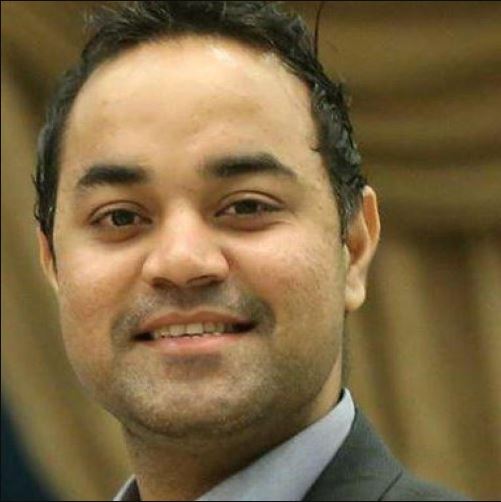
What would you do if you spent years chasing UPSC the most emotionally charged exam in India reached the interview stage, and still didn't make the final cut? Most people would be devastated. Aman chose to pivot. And in doing so, he turned a setback into one of the most remarkable CAT success stories we have heard at CATKing.
In a candid conversation with CATKing's founder, Aman shared how he went from an English Literature graduate chasing the civil services dream, all the way to scoring 99.64 percentile in CAT with a stellar Verbal score of 99.95 percentile. His wife also cleared CAT with 96.6 percentile. This is their story.
Aman's CAT Score
|
Section |
Percentile |
Takeaway |
|
Verbal Ability & RC (VARC) |
99.95 |
Near perfect top 0.05% |
|
Data Interpretation & LR (DILR) |
98.80 |
Exceptional analytical performance |
|
Quantitative Ability (QA) |
89.00 |
Solid, with room for improvement |
|
Overall CAT Score |
99.64 |
Converts to top IIMs and |
The UPSC Years
Aman graduated with a degree in English Literature from a Delhi University college. Like many humanities graduates, he was drawn toward the civil services a career that offers both prestige and the opportunity to serve the nation. The UPSC journey is unlike any other exam; it demands years of preparation, emotional resilience, and near-complete dedication.
Aman went all the way. He cleared the Prelims, cracked the Mains, and made it to the UPSC interview a stage that only the top 2,500 - 3,000 candidates in the country reach. Despite giving it his absolute best, he did not receive a final selection. For most aspirants, this moment is crushing. For Aman, it became a turning point.
"People often get locked into UPSC and don't even realize the world outside," he reflected. "I think giving 10 years to one thing is wrong, at least from my personal point of view. You need to be willing to move on." It takes extraordinary courage to walk away from a dream you have poured years into and even more courage to start fresh.
Why Aman Chose CAT After UPSC
After stepping away from UPSC, Aman began exploring his options. He had a strong foundation in English, analytical thinking developed through years of rigorous UPSC preparation, and an ability to handle long-form reading comprehension skills that translate remarkably well to the CAT exam, particularly the VARC section.
A cousin who was already preparing for MBA entrance exams introduced him to online resources, study channels, and structured content. Aman embraced self-directed learning and completed his preparation material in just two months of focused self-study, followed by approximately four months of serious, structured preparation.
The total CAT preparation window? Around four to six months. That is the power of transferable skills and disciplined preparation.
CAT Preparation Strategy
1. Leverage Your Existing Strengths First
Aman's Literature background gave him a significant edge in VARC. Rather than treating all sections equally, he doubled down on what he already excelled at, building an enormous percentile buffer in Verbal before investing time in other areas. Aspirants should map their strengths early and exploit them strategically.
2. Self-Study First, Then Structured Guidance
Aman completed foundational material independently before joining structured classes. This approach understanding the basics yourself, then refining with expert guidance is highly effective. It prevents over-dependence on coaching while ensuring you do not miss blind spots.
3. Build a Consistent Reading Habit
Aman explicitly attributed his near-perfect verbal score to his love of reading. He made reading a non-negotiable daily habit. For anyone targeting VARC excellence, developing reading stamina and speed through newspapers, quality fiction, and editorial pieces is irreplaceable no shortcut substitutes it.
4. Attend Live Sessions and Clear Doubts Actively
Aman emphasised attending live sessions and not letting doubts accumulate. Passive video consumption creates an illusion of learning. Active participation asking questions, solving along, revisiting difficult concepts is what creates real retention and score improvement.
5. Manage Stress - It Is Not Optional
Having lived through the UPSC grind, Aman understood that anxiety is counterproductive. "If you are stressed, it is not going to help," he said plainly. Developing mental routines morning sessions with full focus, adequate breaks, and avoiding overthinking is as important as subject mastery.
How UPSC Preparation Secretly Helped Aman Crack CAT
Many candidates transitioning from UPSC to CAT underestimate how much of their existing preparation carries over. Here is a breakdown:
• Reading Comprehension: UPSC demands reading dense passages from history, polity, economy, and international affairs. This directly sharpens the RC skills tested in CAT VARC.
• Analytical Reasoning: UPSC Mains' essay and GS papers build logical structuring and argument evaluation the same skills tested in CAT's DILR and critical reasoning questions.
• Time Management Under Pressure: UPSC prelims and mains are timed, high-stakes exams. CAT's 40-minute per section format is demanding, but UPSC veterans are already conditioned to perform under pressure.
• Answer Writing: UPSC essay writing develops the ability to present ideas clearly and concisely invaluable during CAT GD-PI rounds at IIMs.
• Current Affairs for GDPI: UPSC aspirants are always up to date with national and global events. This is a significant advantage during IIM interview processes.
Aman's Message to UPSC Aspirants Considering CAT
Aman receives messages daily from aspirants asking whether they should continue UPSC or explore MBA entrances. His response is measured and honest. He specifically called out the danger of indefinitely extending UPSC preparation without reflecting on whether it is still the right path. The courage to pivot is not a sign of giving up it is a sign of self-awareness. Interestingly, Aman's wife also took CAT alongside him and scored an excellent 96.6 percentile making this a story of not one but two individuals who bet on themselves and won.
How CATKing Helped Aman Structure His Preparation
Aman discovered CATKing through a recommendation and found the structured dashboard, video resources, and live sessions exactly what he needed to complement his self-study. He followed a disciplined routine from the start:
• Completed foundational self-study material within two months of beginning.
• Joined CATKing's structured program and attended live sessions consistently.
• Used the dashboard to track progress and identify weak areas.
• Cleared doubts actively rather than letting them pile up.
• Followed the guidance received during onboarding sessions precisely.
Frequently Asked Questions (FAQs)
Q1 Can UPSC aspirants crack CAT without starting from scratch?
Absolutely. UPSC builds strong reading comprehension, reasoning, and analytical skills that directly translate to CAT's VARC and DILR sections. A focused preparation of 4–6 months is often sufficient for candidates with a solid UPSC background.
Q2 How long did Aman prepare for CAT?
Aman completed two months of self-study followed by approximately four months of structured preparation totalling around six months from start to the CAT exam day.
Q3 What was Aman's strongest CAT section?
Verbal Ability and Reading Comprehension (VARC), where he scored an extraordinary 99.95 percentile placing him among the top 0.05% of all CAT test-takers.
Q4 Is it too late to start CAT if I have spent years on UPSC?
No. Aman's story is proof that a pivot is never too late. The skills built during UPSC preparation are more transferable than most aspirants realise. Begin with a diagnostic mock test, identify your gaps, and build a structured plan.
Q5 What does a 99.64 percentile in CAT mean?
A 99.64 percentile means Aman performed better than approximately 99.64% of all CAT candidates. This score makes him eligible for the top IIMs and premier business schools across India.
How helpful did you find this article?
Thanks for the feedback! Your rating helps us improve future digests.
