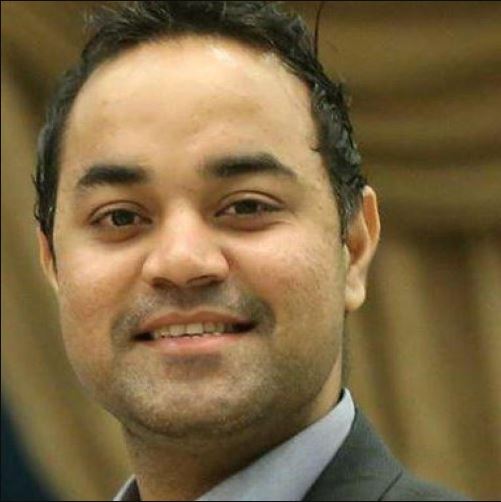
There is a persistent myth in the MBA preparation community: that CAT toppers are almost always IITians or NITians who studied at premier engineering colleges. Tushar's story is a direct, powerful rebuttal to that idea. A 21-year-old engineer from a non-IIT, non-NIT background, Tushar scored 99.80 percentile in CAT without a single mock test ever showing that number before the actual exam. He converted IIM Kolkata, MDI Gurgaon, IIM Lucknow, IIM Delhi, and several other top B-schools. And he did it by following a brutally honest, repetition-driven preparation strategy that anyone can adopt.
In a candid late-night session with CATKing's founder, Tushar broke down exactly how he got there from his early mock scores (including genuine zeros in sections) to the thick error notebook that became his biggest weapon. This is his full story.
Tushar's CAT Score & Conversion
|
Category |
Detail |
Significance |
|
Overall CAT Percentile |
99.80 |
Top 0.20% of all CAT takers nationwide |
|
VARC Percentile |
99.25 |
Near-perfect reading comprehension score |
|
DILR Percentile |
98.39 |
Strong analytical and logical reasoning |
|
Academic Background |
Non-IIT / Non-NIT Engineering |
Proof that college brand does not decide CAT fate |
|
10th Grade Score |
92% |
Strong academic foundation |
|
12th Grade Score |
85% |
Consistent performer across levels |
|
Colleges Converted |
IIM Kolkata, MDI Gurgaon, IIM Lucknow, IIM Delhi |
Multiple top-10 B-school offers |
The Starting Point: Zeros in Mocks and a Non-Premier College
Tushar's journey did not begin with impressive mock scores or the safety net of a prestigious engineering college. His early mocks showed single-digit sectional scores. There were genuine zeros in sections something most aspirants would find devastating. He had also previously attempted a startup that did not scale, which meant his motivation for an MBA was deeply personal and strategic.
"I didn't clear IIT Advanced because of my math score," he said, with complete honesty. "The sectional cut-offs, my marks all were single digits. I just fell short." But rather than let that define his future, Tushar chose to treat his past scores as data, not identity.
He also went through a phase of feeling depressed mid-preparation a reality many aspirants face but few openly discuss. There were days he skipped studying entirely, days when nothing seemed to be working. But he came back. Every time.
The Core Strategy: Three-Round Mock Analysis System
What separated Tushar from aspirants who take dozens of mocks without improving was his meticulous three-round review process. He did not just take tests and check scores. He dissected every single mock three times:
1. Round 1 Attempt the Full Paper
Take the mock under strict exam conditions no breaks, no distractions, real-time pressure. The goal is simulating the actual CAT environment precisely.
2. Round 2 Full Paper Re-attempt
After scoring, go through the entire paper a second time independently. Re-solve every question without looking at the answer key. This builds self-correction ability.
3. Round 3 Deep Error Analysis
This is where the real work happens. Go through every single wrong answer. Identify the exact moment of error was it a concept gap, a calculation mistake, a misread question, or poor time allocation? Write it all down.
Tushar built what he called a "thick book" an error notebook where he wrote down every single mistake from every single mock. In verbal sections, he would copy the entire paragraph where he went wrong and annotate what misled him. In quant, he categorised errors by topic algebra versus time-speed-distance versus arithmetic and tracked which areas were genuinely weak versus which were careless errors.
"If you write down all your mistakes even 10 to 20 wrong answers per mock across 50 mocks you will have a personalised problem bank of everything that broke your score. That is exactly what you need to fix," he explained.
Quantitative Ability: The Iterative Build Approach
Tushar's approach to Quant was rooted in what he called iterative learning the idea that you do not need to master a topic on the first attempt. You just need to cover 20% correctly the first time, then build on it.
Step-by-Step Quant Plan
• Start with Arithmetic first it forms the backbone of Quant and contributes heavily to scoring. Do not move on until you have a working grip on arithmetic concepts.
• Cover the entire syllabus once, even if imperfectly. A rough first pass across all topics is better than perfecting one area while ignoring others.
• Watch video lectures, then revisit them a second time after attempting problems. The second watch surfaces things you missed the first time.
• Use mock tests as diagnostic tools, not performance benchmarks. Each mock reveals which specific quant topics need attention.
• Gradually add topics and begin timed practice once fundamentals are in place. Do not time yourself too early it builds fear, not skill.
Tushar acknowledged that despite low early scores, staying focused on arithmetic and building iteratively is what eventually pushed his Quant scores to competitive levels even without an IIT-level mathematics background.
DILR: Persistence Over Perfection
Data Interpretation and Logical Reasoning is the section most aspirants find unpredictable. Tushar's DILR score of 98.39 percentile came from a very disciplined approach:
• Attempt sets in mocks using a consistent approach do not keep switching strategies. Pick one approach, test it across three mocks, evaluate results, then refine.
• If you cannot solve a set, write down how far you got and what information you missed. Return to the same concept fresh the next day.
• After 10 days, re-attempt the same unsolved questions without looking at solutions. Only check the answer if you are still stuck after a genuine second attempt.
• Analyse what specific piece of information unlocked the solution. Write it in your notebook as a learning, not just a tick-mark.
• Work through old CAT papers consistently the original papers are still the highest-quality DILR practice material available.
The message is simple: do not get demotivated by initial DILR zeros. The section rewards pattern recognition that develops over time, not raw intelligence. Keep showing up.
VARC: Two Rules That Drove a 99.25 Percentile Score
Tushar did not begin as a natural reader. He was candid that verbal ability was not his strongest suit early on. His 99.25 VARC percentile came from two non-negotiable daily habits:
Rule 1: Read Every Single Day No Exceptions
Tushar read daily, everywhere including on crowded local trains. He expanded his reading to include books on psychology, business strategy, consumer behaviour, and marketing. The CAT RC section tests the ability to engage with dense, unfamiliar texts. The only reliable way to build this is consistent exposure to varied reading material. Two RCs per day, every day, regardless of mood, energy, or circumstance.
Rule 2: Practice Every Question Type Without Skipping
Para jumbles, Para-summary, Odd sentence out, and RC do not skip any type. Each question format tests a slightly different cognitive skill. Tushar's preparation covered every format systematically. In RC specifically, he experimented with different strategies across sets of three mocks noting pros, cons, and time costs of each approach before settling on what worked best for him.
The key insight: understanding English and applying it under exam conditions are two different skills. You can be a fluent English reader and still fail CAT VARC. The exam tests a specific, trainable skill practised application under time pressure.
The 50-Mock Discipline
Tushar took approximately 50 full-length mock tests a number far above the average aspirant. But the number itself is not the point. What matters is how he used them.
Most aspirants take a mock, check their score, feel good or bad about the number, and move on. Tushar treated every mock as a structured diagnostic exercise. Each one revealed something specific about his preparation and each one demanded a written response in his error notebook.
• Took the mock under real exam conditions no looking up, no pausing.
• Re-attempted the full paper independently after the first pass.
• Conducted deep topic-wise error analysis and documented every mistake.
• Tracked patterns across mocks which topics kept appearing in errors, which ones were improving.
• Used the error notebook as a revision resource before the actual CAT exam.
"CAT is not just a knowledge exam. It is about time management how you structure your study day to perform at your absolute best when it counts," Tushar said. The mock test is not the destination; it is the training ground.
Can You Crack CAT Without Coaching?
This question comes up constantly. Tushar's answer was balanced and honest: yes, it is technically possible to crack CAT without coaching some of his seniors have done it. But his recommendation is clear. His warning is equally important: joining coaching without commitment is worse than not joining at all. If you have access to structured resources but are not using them with full seriousness, you are creating an illusion of preparation without the substance.
How CATKing Shaped Tushar's Preparation
Tushar was initially sceptical about joining CATKing. He had already paid for another coaching programme that had not delivered results and spending more money on a second platform felt like a risk.
"I had already put money into something. The decision was twice as hard for me because I had already spent on a coaching that did not help much," he said. But after watching CATKing's content on YouTube, he decided to give it a shot and the structured dashboard, live sessions, and data-driven approach to tracking performance changed his preparation entirely.
What specifically helped Tushar with CATKing:
• The dashboard's structured progression gave him a clear roadmap rather than random topic-hopping.
• Visual data on how scores move across a population of students helped him understand that score fluctuations in mocks are normal and expected.
• Live sessions enabled real-time doubt clearing preventing gaps from compounding over time.
• The community of serious aspirants created accountability and motivation during difficult phases.
• Access to high-quality mock tests that mimicked actual CAT difficulty levels.
5 Lessons Every CAT 2025 Aspirant Should Take From Tushar's Journey
1. Your college does not define your CAT percentile.
Tushar came from a non-IIT, non-NIT background and scored 99.80. The exam tests reasoning and reading skills built through deliberate practice, not institutional pedigree.
2. Early mock scores are irrelevant process is everything.
Tushar had zeros in sections early on. Those scores had no predictive value for his final percentile. What mattered was the system he built around each mock.
3. An error notebook is your most underused weapon.
Writing down every mistake forces you to confront patterns in your errors. A physical notebook of 50 mocks' worth of errors is a personalised study guide that no coaching material can replicate.
4. Consistency beats intensity.
Reading every day on a crowded train is more valuable than a single 6-hour study marathon. CAT rewards habits built over months not last-minute cram sessions.
5. Alignment is the real competitive advantage.
Tushar used this word repeatedly. When your belief in what you are doing, your daily effort, and your strategy are all pointing in the same direction results follow. Without alignment, even hard work produces inconsistent results.
Frequently Asked Questions (FAQ)
Q1 Is it possible to score 99 percentile in CAT without an IIT or NIT background?
Yes, Tushar's 99.80 percentile from a non-IIT, non-NIT college is direct proof. CAT does not ask for your college on the scorecard. It tests reasoning, reading comprehension, and data interpretation all of which are trainable skills.
Q2 How many mock tests should I take for CAT 2025?
Tushar took approximately 50 full-length mocks. But the number matters less than the quality of review. Taking 50 mocks without analysis is far less effective than taking 25 mocks with a rigorous three-round review process.
Q3 What is the best way to improve in CAT DILR?
Consistent set practice with strategy experimentation. Try one approach across three mocks, evaluate results, adjust, and repeat. Never switch strategies after a single bad performance give each approach enough attempts to reveal its true potential.
Q4 How important is reading for CAT VARC preparation?
Critical. Tushar built a near-perfect VARC score primarily through daily reading on trains, at home, everywhere. Two RCs per day, consistent exposure to varied non-fiction writing, and systematic practice of all VARC question types are the core pillars.
Q5 What does IIM Kolkata average placement look like?
Current average placements at IIM Kolkata are approximately 35 LPA, with projections of 40-42 LPA within the next two years making it one of the highest ROI MBA programmes in India.
Q6 Should I join coaching for CAT?
Tushar recommends it but only with full commitment. Joining and not engaging seriously is counterproductive. If you join structured coaching, use every resource available: live sessions, mock tests, the dashboard, and direct doubt resolution.
How helpful did you find this article?
Thanks for the feedback! Your rating helps us improve future digests.
